
Rabbits
Poultry
Laying hens
Quails
Guinea pigs
Pigs
Ostriches
Sheep and goats
Pigeons
Pheasants
Forest animals
Prevention in small-scale poultry farming
The breeder’s goal should be to achieve and maintain the maximum health of the animals being kept. Healthy and high-quality animals produce high-quality eggs and other nutritionally rich foods suitable for our diet. Another pleasure is the sight of healthy animals that can present themselves well to the breeder.
Clean Environment as the Foundation
The most important step is maintaining a sufficient level of environmental cleanliness. Environmental hygiene, together with proper nutrition and housing, represents one of the three essential pillars of successful breeding. Breeders should prevent unnecessary accumulation of droppings in areas where the animals move around. Ideally, cleaning of the housing facilities should be carried out at regular intervals.
Regular Mechanical Cleaning
Basic procedures should include thorough mechanical cleaning of the interior equipment of the henhouse, such as dropping boards, perimeter walls, perches, and feeders. All dried manure and feed residues must be removed. It is also important to sweep away cobwebs where dust accumulates.
After mechanical cleaning, it is advisable to carry out disinfection. This intervention aims to reduce the number of pathogens in the henhouse. Suitable options include treatment with a bleach solution, slaked lime, or other products designed for this purpose. These substances should be applied when the poultry is not present in the house, as the chemicals and their fumes may be toxic to birds. Before application, it is essential to carefully read the instructions provided with the product.
Annual Care of the Run
Most of us keep animals in a limited space for several years. Therefore, it is advisable to clean and refresh the run every year. The simplest method is to dig over the ground and reseed it with grass or cereals. Another option is liming. The run can also be divided into several sections, leaving one part unused for a period of time to allow the environment to recover through the effects of weather conditions such as sunlight or frost.
Ensuring Suitable Microclimatic Conditions
Microclimatic conditions greatly influence the health of animals. These include drafts or high relative humidity, which is related to the quality of ventilation in the henhouse. Proper ventilation can be ensured by installing a roof vent or using another structural solution to remove excess moisture from the space.
It is completely unsuitable to house waterfowl and gallinaceous poultry together in one building. Waterfowl produce significant moisture, which is particularly problematic during winter months when temperatures fall below freezing, as it may lead to frostbite of chicken combs.
Parasite Prevention
It is important to check the animals regularly for signs of parasite infestation. Prevention of introducing parasites into the flock is carried out by applying insecticidal preparations preventively around the cloaca and under the wings immediately after bringing birds home from exhibitions or whenever introducing a new individual. It is also advisable to spray these preparations during the regular replacement of straw in laying nests.
An alternative method is to place walnut leaves or tansy in the nests, as they contain aromatic substances that repel external parasites.
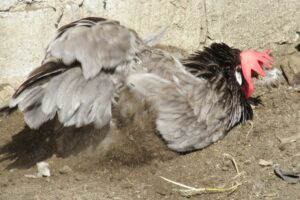
A dust bath is essential for gallinaceous poultry. This is an area with sand that helps birds rid themselves of ectoparasites. Hens can dust-bathe as needed, performing mechanical cleaning that can be described as a “dry shower.”
Quarantine
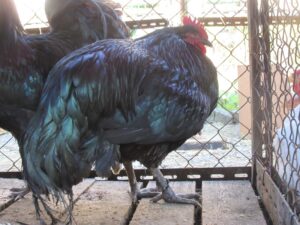
Another important step every breeder should follow is quarantining newly purchased animals, and ideally also birds that have been exhibited at shows. The quarantine area should be separated from the rest of the flock. Feeding the birds in quarantine should ideally be done at the end of the feeding routine to prevent the breeder’s activities from potentially spreading infection to other animals. Quarantine should last 4–7 weeks, depending on the health status of the birds.
Quarantine is also the place where birds from one’s own flock showing signs of illness should be placed for further observation. By separating suspicious animals in time, it is possible—depending on the type of disease—to prevent an outbreak throughout the entire flock.
Conclusion
Proper prevention in breeding leads to achieving and maintaining good animal health. By following the above principles, breeders can save considerable costs associated with treating animals after a disease outbreak occurs.
Related posts
21. August 2026
Poultry belongs to the group of farm animals with a very intensive metabolism, which is the foundation of their high productivity. The rapid growth of broilers, high egg production in laying hens, and good reproductive performance of breeding stock are the result of long-term genetic selection, high-quality nutrition, and proper flock management. At the same…
27. May 2026
In small-scale farming practice, the term grit refers to insoluble mineral material that poultry ingest to mechanically process feed in their digestive tract. It is therefore a physically acting component that supports digestion. Typically, it consists of small stones (often siliceous gravel). On the other hand, there is limestone (calcium carbonate), which also fulfills a…
3. March 2026
Sprouted cereals are a simple way to enrich the feed ration, especially for poultry. Thanks to the germination process, nutrient digestibility increases and their availability improves. However, they are not a substitute for a complete feed mixture, but rather a suitable supplement when used properly and hygienically.
23. February 2026
In small-scale livestock farming, smaller quantities of feed mixtures are often used. Therefore, it is not uncommon for a farmer to have some pellets or loose feed mixture left even after the (expiration) minimum shelf life date. Is it still possible to feed such feed to the animals?
5. December 2025
In small-scale farming, it is common to encounter situations where breeders offer animals a smaller amount of complete feed mixture than recommended by the manufacturer, and replace the rest of the feed ration with grains such as wheat, barley, or corn. Grains certainly have their value in feeding, but on their own, they are not…
Related products
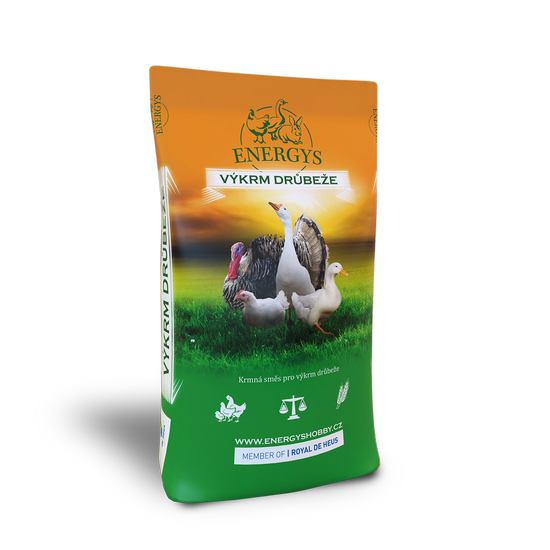
POULTRY UNI 30
A mashed concentrate for fattening of all categories of poultry, which includes the highest quality soja. It is mixed with cereals in a ratio of 20-40% (by type or phase of fattening). It contributes to fast growth and a high meat content. It does not contain coccidiostats.
BROILER MAXI
Feed for the final phase of fattening broilers. Supports a high meat content and a delicate meat taste. Start using it 5 or more days before slaughter. Does not contain coccidiostatics.
BROILER MIDI FORTE
A granulated feed mix for the intensive fattening of broilers from 15 days of age to a minimum of 5 days before ending feeding up. The Coccidiostat included lowers mortality during fattening. For the next phase of fattening Broiler MAXI is a suitable mix.
BROILER MINI FORTE
A ground feed mix with Coccidosistats, for the intensive feeding of broiler chickens up to 14 days of age and a support to fast growth a an excellent state of health in your broliers-
DUCK MINI
A high quality ground mix for fattening ducks and geese up to their 2nd week. It is suitable for fast growth and high meat content.
TURKEY MAXI
Feed for the final stage of turkey fattening. Use from the 13th week of age. It does not contain a coccidiostat.
TURKEY MIDI FORTE
A high quality granulated feed with coccidiostats for feeding turkeys from 5 to 12 weeks of age. It is the basis for fast growth, high meat content and an excellent state of health of your turkeys. The coccidiostat content lowers mortality during feeding. It continues on from feeding with Turkey Mini Forte. The live weight for turkeys at the end of this period should be around 7 kg for hen turkeys and 10 kg for cocks.
TURKEY MINI FORTE
A ground mix with Coccidiostats for fattening turkeys up to an age of 4 weeks. It is the basis for high meat content. Afterwards use the Turkey Midi Forte mix.
DUCK MAXI
A granulated mix for feeding ducks and geese from 3 weeks of age up to slaughter. The nutrients it contains support fast growth, a high meat content and a delicate meat taste.