
Rabbits
Poultry
Laying hens
Quails
Guinea pigs
Pigs
Ostriches
Sheep and goats
Pigeons
Pheasants
Forest animals
How to store eggs?
In our flock, hens should lay eggs in laying nests lined with clean straw; the eggs should be clean and have intact shells.
Laying nests
Under our conditions, most eggs are laid between 8 a.m. and 12 noon, so it is advisable to check the nests and collect the eggs at least twice a day.
Laying nests that allow the egg to roll out of the hen’s reach are advantageous – this prevents contamination and damage to the egg for any reason.
Egg storage
Eggs should always be placed on a tray or in a carton with the pointed end facing down – the air cell is at the blunt end and must remain at the top. Eggs are best stored at a constant temperature of around 10°C for a maximum of 3–4 weeks; at a constant temperature of around 4°C they can be stored even longer – this used to be common cold-storage practice.
In the past, for the winter period when fresh eggs were scarce, eggs were preserved in water glass (sodium silicate solution) or lime water for several months.
Of course, fresh eggs are the best – ideally consumed within one to two weeks after laying.
Related posts
2. September 2026
If you keep hens, you may notice a change at the turn of summer and autumn that can surprise even experienced poultry keepers. More feathers start appearing in the coop, the hens look “scruffy” or partially plucked, and at the same time they lay fewer eggs. Sometimes egg production drops only slightly, while in other…
21. August 2026
Poultry belongs to the group of farm animals with a very intensive metabolism, which is the foundation of their high productivity. The rapid growth of broilers, high egg production in laying hens, and good reproductive performance of breeding stock are the result of long-term genetic selection, high-quality nutrition, and proper flock management. At the same…
4. June 2026
Feather pecking and subsequent cannibalism are among the most serious behavioral disorders in laying hen flocks and can cause significant economic losses (e.g., reduced egg production, poorer feed conversion, and higher mortality).
27. May 2026
In small-scale farming practice, the term grit refers to insoluble mineral material that poultry ingest to mechanically process feed in their digestive tract. It is therefore a physically acting component that supports digestion. Typically, it consists of small stones (often siliceous gravel). On the other hand, there is limestone (calcium carbonate), which also fulfills a…
3. March 2026
Sprouted cereals are a simple way to enrich the feed ration, especially for poultry. Thanks to the germination process, nutrient digestibility increases and their availability improves. However, they are not a substitute for a complete feed mixture, but rather a suitable supplement when used properly and hygienically.
Related products
POULTRY UNI 30
A mashed concentrate for fattening of all categories of poultry, which includes the highest quality soja. It is mixed with cereals in a ratio of 20-40% (by type or phase of fattening). It contributes to fast growth and a high meat content. It does not contain coccidiostats.
LAYER REPRO
Granulated feed for laying hen breeds. Supports higher hatching rates and the successful development of the embryo (higher content of chosen substances). It can also be used for other categories of poultry. Recommended to be fed 1–2 months before the expected laying period. The laying hen must have access to an adequate amount of potable water.
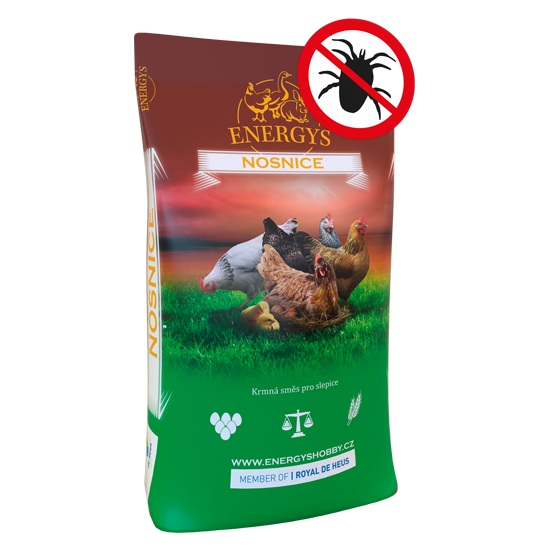
LAYER GOLD
Granulated feed for laying hens. Supports high egg production with strong shells and beautiful yolk color. Enriched with a complex of natural substances that combat chicken mites, promote detoxification, liver health, and prevent intestinal parasites. Follows on from the Chicken MIDI feed mixture. Feed year-round for long-term protection.
LAYER KLASIK
A powered feeding mix intended for laying hens. With its rough shredded structure it contributes to maximum usability.
CHICKEN MIDI
From the 5th week to the end of the 20 week old chickens. It follows on from feeding with the Chicken MINI feed. Through its make up it helps in the correct development of the organism and with future high usability. It doesn’t contain coccidiostats. It is produced in two forms, granulated and powder.
CHICKEN MINI
A crumbled compound feed without anti-coccidiosides. Suitable for reared chickens of the laying hen type till the end of their 4 weeks of age. It contains a balanced ratio of nutrients supporting the correct development of chickens. For weaning chickens the following mix is CHICKEN MIDI.