
Rabbits
Poultry
Laying hens
Quails
Guinea pigs
Pigs
Ostriches
Sheep and goats
Pigeons
Pheasants
Forest animals
Raw materials in feed mixtures: grit and limestone
In small-scale farming practice, the term grit refers to insoluble mineral material that poultry ingest to mechanically process feed in their digestive tract. It is therefore a physically acting component that supports digestion. Typically, it consists of small stones (often siliceous gravel). On the other hand, there is limestone (calcium carbonate), which also fulfills a nutritional function because it is soluble.
Appearance and identification in feed
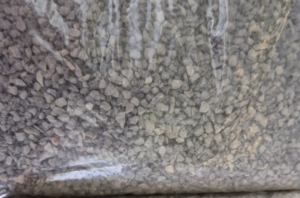
Both grit and coarse limestone consist of small, sharp-edged particles. Their structure is firm, mineral-based, and odorless. Particle size (so-called fraction) varies depending on the animal category—from very fine grains to fragments several millimeters in size.
Color depends on origin:
- Light shades (white, gray) for limestone
- Darker or mixed shades for siliceous stones
In mash (loose) feed mixtures, they are clearly visible. Grit and coarse limestone appear as heavier, shinier, or sharper particles among other components, most often cereals. Fine limestone appears as dust. In pelleted feeds, grit and limestone are more difficult for the farmer to distinguish, as they are incorporated into the pellet structure.
Which animals is it used for and why?
The use of grit is typical primarily for poultry due to the specific structure of their digestive tract. Poultry have no teeth, so mechanical breakdown of feed occurs in the gizzard (poultry have two stomachs: the glandular stomach and the muscular stomach). Here, grit or coarse limestone act as “millstones,” helping to grind grains and fiber, thereby increasing nutrient digestibility. Without grit, digestion may be impaired, feed utilization reduced, and in some cases, gizzard dysfunction may occur.
Limestone in feed mixtures
In feed mixtures, calcium components—primarily in the form of calcium carbonate (limestone)—are very common.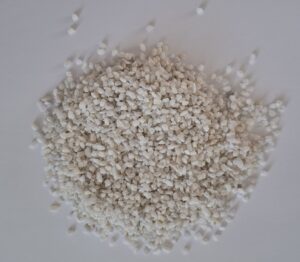
Limestone is a fundamental source of calcium, which is essential for:
- Eggshell formation
- Bone mineralization
- Proper function of the nervous and muscular systems
In laying hens, calcium is one of the most important components of the feed ration.
In practice, limestone is used in two basic fractions:
-
Fine fraction – Finely ground limestone dissolves quickly in the upper part of the digestive tract. Calcium thus becomes rapidly available for metabolic processes. This type is particularly suitable for meeting immediate calcium needs during the day.
-
Coarse fraction – Larger particles remain in the gizzard for a longer period. In this respect, they partly act like grit. Calcium is released/dissolved gradually, which is particularly important for laying hens during eggshell formation, which takes place mainly at night. This “slow-release” calcium source ensures a stable level in the body and reduces the risk of poor-quality shells.
How much grit and limestone do poultry need?
Requirements vary depending on species and productivity. In laying hens, calcium content in the feed mixture typically ranges between approximately 3.5–4.5% Ca, corresponding to about 7–10% limestone in the complete feed mixture.
In free-range systems, poultry usually consume insoluble grit as needed, or it should be provided in an accessible location so the birds can ingest it freely.
Conclusion
Grit represents an important, though often overlooked, component of poultry nutrition. While the insoluble form supports mechanical digestion, limestone also plays a crucial role as a calcium source. The correct combination of fine and coarse fractions has a direct impact on health and productivity, especially in laying hens.
Sources used in this article are available from the author, Ing. Lucie Humeni.
Frequently asked questions
1. What is the main difference between grit and limestone?
Grit is an insoluble mineral material (e.g., siliceous gravel) that helps mechanically grind feed in the poultry gizzard. Limestone (calcium carbonate), in contrast, is soluble and primarily serves as a source of calcium for the body.
2. Why do poultry need grit?
Poultry have no teeth, so feed breakdown occurs in the gizzard. Grit acts as “millstones” that help crush grains and fiber, improving nutrient digestibility.
3. What role does limestone play in laying hens?
Limestone is a key source of calcium necessary for strong eggshell formation, healthy bones, and proper muscle and nervous system function. In laying hens, calcium is one of the most important components of the feed ration.
4. What is the difference between fine and coarse limestone fractions?
The fine fraction dissolves quickly and meets immediate calcium needs. The coarse fraction remains longer in the gizzard and releases calcium gradually, which is especially important during nighttime eggshell formation.
5. How much calcium do laying hens need?
Calcium content in feed for laying hens typically ranges between 3.5–4.5% Ca, corresponding to approximately 7–10% limestone in complete feed mixtures. Insoluble grit is usually consumed according to need, especially when birds have access to outdoor runs.
Related products
POULTRY UNI 30
A mashed concentrate for fattening of all categories of poultry, which includes the highest quality soja. It is mixed with cereals in a ratio of 20-40% (by type or phase of fattening). It contributes to fast growth and a high meat content. It does not contain coccidiostats.
BROILER MAXI
Feed for the final phase of fattening broilers. Supports a high meat content and a delicate meat taste. Start using it 5 or more days before slaughter. Does not contain coccidiostatics.
BROILER MIDI FORTE
A granulated feed mix for the intensive fattening of broilers from 15 days of age to a minimum of 5 days before ending feeding up. The Coccidiostat included lowers mortality during fattening. For the next phase of fattening Broiler MAXI is a suitable mix.
BROILER MINI FORTE
A ground feed mix with Coccidosistats, for the intensive feeding of broiler chickens up to 14 days of age and a support to fast growth a an excellent state of health in your broliers-
DUCK MINI
A high quality ground mix for fattening ducks and geese up to their 2nd week. It is suitable for fast growth and high meat content.
TURKEY MAXI
Feed for the final stage of turkey fattening. Use from the 13th week of age. It does not contain a coccidiostat.
TURKEY MIDI FORTE
A high quality granulated feed with coccidiostats for feeding turkeys from 5 to 12 weeks of age. It is the basis for fast growth, high meat content and an excellent state of health of your turkeys. The coccidiostat content lowers mortality during feeding. It continues on from feeding with Turkey Mini Forte. The live weight for turkeys at the end of this period should be around 7 kg for hen turkeys and 10 kg for cocks.
TURKEY MINI FORTE
A ground mix with Coccidiostats for fattening turkeys up to an age of 4 weeks. It is the basis for high meat content. Afterwards use the Turkey Midi Forte mix.
DUCK MAXI
A granulated mix for feeding ducks and geese from 3 weeks of age up to slaughter. The nutrients it contains support fast growth , a high meat content and a delicate meat taste.
Related products
POULTRY UNI 30
A mashed concentrate for fattening of all categories of poultry, which includes the highest quality soja. It is mixed with cereals in a ratio of 20-40% (by type or phase of fattening). It contributes to fast growth and a high meat content. It does not contain coccidiostats.
LAYER REPRO
Granulated feed for laying hen breeds. Supports higher hatching rates and the successful development of the embryo. Higher content of chosen substances). The laying hen must have access to an adequate amount of potable water.
LAYER GOLD
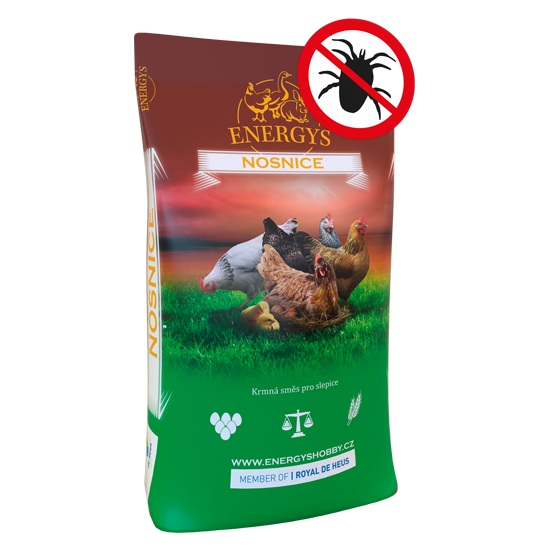
Granulated feed for laying hens. Supports high egg production with strong shells and beautiful yolk color. Enriched with a complex of natural substances that combat chicken mites, promote detoxification, liver health, and prevent intestinal parasites. Follows on from the Chicken MIDI feed mixture. Feed year-round for long-term protection.
LAYER KLASIK
A powered feeding mix intended for laying hens. With its rough shredded structure it contributes to maximum usability.
CHICKEN MIDI
From the 5th week to the end of the 20 week old chickens. It follows on from feeding with the Chicken MINI feed. Through its make up it helps in the correct development of the organism and with future high usability. It doesn’t contain coccidiostats. It is produced in two forms, granulated and powder.
CHICKEN MINI
A crumbled compound feed without anti-coccidiosides. Suitable for reared chickens of the laying hen type till the end of their 4 weeks of age. It contains a balanced ratio of nutrients supporting the correct development of chickens. For weaning chickens the following mix is CHICKEN MIDI.