Rabbits
Poultry
Laying hens
Quails
Guinea pigs
Pigs
Ostriches
Sheep and goats
Pigeons
Pheasants
Forest animals
The influence of nutrition on the quality of laying hen eggs
Egg quality is no coincidence. It is a direct reflection of what laying hens consume over the long term in their feed.
In small-scale poultry keeping, the importance of a complete feed mixture is often underestimated, with many relying on kitchen scraps or grain-only feeding as a “supplement.” The result is often shell problems, watery egg whites, or inconsistent egg size. Nutrition affects virtually every measurable egg quality parameter, from yolk color to shell strength. Current studies also confirm that a properly balanced diet is the most important factor influencing egg quality, even more significant than breed or housing conditions.
Feed mixture as the foundation, not a supplement
A complete feed mixture is not just “pellets.” It is a precisely formulated combination of nutrients, energy, amino acids, minerals, and vitamins that must be provided in the correct ratios and forms for optimal availability (so-called biological availability).
One-sided grain feeding (e.g., wheat, corn) leads to:
- deficiency of essential amino acids (e.g., methionine, lysine),
- low calcium content,
- an imbalanced Ca ratio,
- vitamin D₃ deficiency.
The consequences are not only poorer production results, but above all deteriorated egg quality parameters. Studies repeatedly show that stable egg quality can only be maintained with a nutritionally complete diet.
Yolk: color, composition, and nutrition
Yolk color is the most visible characteristic for both breeders and consumers. However, it is not an indicator of “healthiness,” but rather of carotenoid intake.
Factors influencing yolk color:
- xanthophylls (e.g., lutein, zeaxanthin) from corn and alfalfa,
- natural pigments (paprika, marigold),
- fats in feed (which improve absorption).
It can be said that increasing carotenoid levels in feed leads to more intense yolk pigmentation. Pale yolks in backyard flocks often indicate a poor-quality diet, not necessarily a health issue.
Egg white: density and protein quality
Egg white quality (“thick” vs. “watery”) is related to the content and structure of proteins, especially ovomucin.
Nutritional factors:
- sufficient high-quality protein (amino acids),
- balanced energy intake,
- trace elements (e.g., zinc).
In practice, protein deficiency manifests as a “runny egg white.” Egg white quality is also influenced by the age of the hens, but proper nutrition can significantly reduce this effect.
Shell: strength, deformities, and cracking
The eggshell consists of more than 90% calcium carbonate. Its quality depends mainly on calcium metabolism.
Important nutrients:
- calcium (Ca),
- phosphorus (P),
- vitamin D₃ (cholecalciferol),
- trace elements (manganese, zinc).
Without sufficient vitamin D₃, calcium cannot be effectively absorbed, resulting in:
- thin shells,
- deformities,
- a higher proportion of cracked eggs.
Proper calcium and vitamin D₃ levels significantly improve shell strength and reduce shell defects. The form of calcium also matters. Coarser particles (e.g., limestone) are released gradually and better cover the hen’s needs during nighttime shell formation.
Egg size and its regulation
Egg size is related to:
- energy intake,
- protein content,
- genetic factors.
Higher intake of energy and amino acids usually leads to larger eggs. Conversely, undernutrition or one-sided feeding causes smaller and inconsistent egg sizes.
Conclusion
Egg quality starts at the feeder. Without a balanced feed mixture, it is impossible to consistently achieve strong shells, high-quality egg whites, and stable egg size over the long term. Supplements and “homemade” feeding can only serve as additions, not as the foundation of the diet. Whenever problems occur—whether cracked shells, pale yolks, or even feather pecking—the first step should always be to review the hens’ nutrition.
Sources used for this article are available from the author, Ing. Lucie Humeni.
Related products
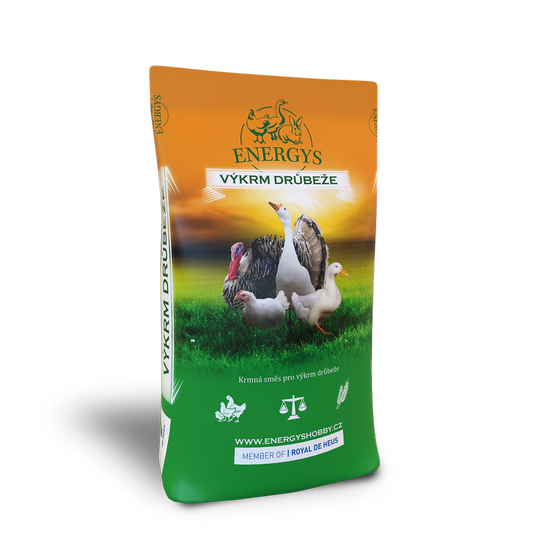
POULTRY UNI 30
A mashed concentrate for fattening of all categories of poultry, which includes the highest quality soja. It is mixed with cereals in a ratio of 20-40% (by type or phase of fattening). It contributes to fast growth and a high meat content. It does not contain coccidiostats.
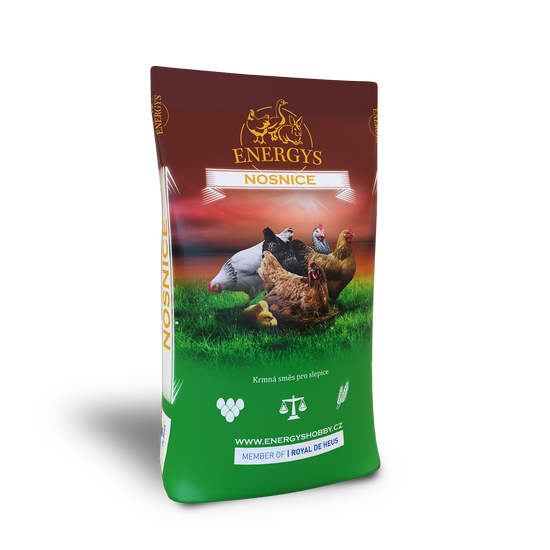
LAYER REPRO
Granulated feed for laying hen breeds. Supports higher hatching rates and the successful development of the embryo (higher content of chosen substances). It can also be used for other categories of poultry. Recommended to be fed 1–2 months before the expected laying period. The laying hen must have access to an adequate amount of potable water.
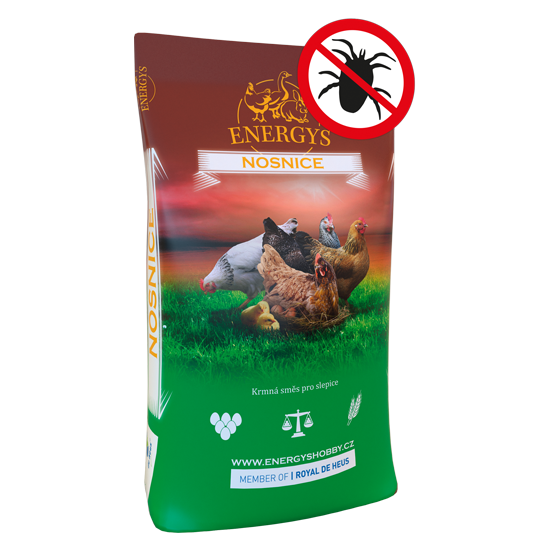
LAYER GOLD
Granulated feed for laying hens. Supports high egg production with strong shells and beautiful yolk color. Enriched with a complex of natural substances that combat chicken mites, promote detoxification, liver health, and prevent intestinal parasites. Follows on from the Chicken MIDI feed mixture. Feed year-round for long-term protection.
LAYER KLASIK
A powered feeding mix intended for laying hens. With its rough shredded structure it contributes to maximum usability.
CHICKEN MIDI
From the 5th week to the end of the 20 week old chickens. It follows on from feeding with the Chicken MINI feed. Through its make up it helps in the correct development of the organism and with future high usability. It doesn’t contain coccidiostats. It is produced in two forms, granulated and powder.
CHICKEN MINI
A crumbled compound feed without anti-coccidiosides. Suitable for reared chickens of the laying hen type till the end of their 4 weeks of age. It contains a balanced ratio of nutrients supporting the correct development of chickens. For weaning chickens the following mix is CHICKEN MIDI.