
Rabbits
Poultry
Laying hens
Quails
Guinea pigs
Pigs
Ostriches
Sheep and goats
Pigeons
Pheasants
Forest animals
Appropriate and inappropriate breeders practices when feeding rabbits
Small-scale animal husbandry is also characterized by a certain degree of “folk creativity.” This mainly concerns technologies and techniques used in housing and feeding rabbits. Some of these practices have shown such positive effects that they have become routine in these farms. Other habits, however, are less suitable and may cause problems with the performance and health of the animals kept.
Inappropriate feeding practices in rabbits
Feeding rabbits is particularly challenging because they are relatively sensitive animals when it comes to changes and the quality of their diet. The following are examples of inappropriate feeding habits in rabbits.
Feeding dry bread
The tradition of feeding rabbits dry bread is deeply rooted in the Czech Republic. However, from a dietary perspective, it must be noted that feeding dry bread is not suitable for rabbits, especially if given regularly. Bread contains a significant amount of starch, which can cause digestive problems, particularly in high‑risk categories of rabbits (after transport, young rabbits, animals in recovery, etc.). There is also a risk of mold in improperly dried bread.
While it is true that rabbits can wear down their incisors by chewing dry bread, they can do so just as effectively with regular hard feed (grains, pellets, hay, etc.). Another disadvantage of feeding dry bread is its unstable moisture/dry matter content. In hutches, dry bread absorbs air humidity, making it even more dietetically unsuitable, particularly due to its bloating effects.
Feeding large amounts of dry bread to young rabbits, which do not yet have sufficient amylase enzyme activity to break down starch, can be considered catastrophic.
Overfeeding rabbits
The second most common mistake among rabbit breeders in the Czech Republic is the unnecessary overfeeding of rabbits with concentrated feeds. The rabbit’s digestive tract is generally not well adapted to digesting large amounts of concentrated feed, which reflects the rabbit’s natural feeding behavior in the wild.
The situation becomes worse when breeders provide concentrated feeds ad libitum. Besides being economically inefficient, this feeding technique has significant health disadvantages. Especially in high‑risk categories of rabbits, it often quickly leads to digestive problems, particularly if the rabbit does not receive enough roughage. Overfeeding also results in poor intestinal microflora.
By contrast, the “golden rule” in small‑scale rabbit breeding is to offer an amount of concentrated feed that the rabbit can consume within 15–30 minutes. Any leftovers should be removed until the next feeding (feeding 1–2 times per day). Roughage (e.g., hay) should be available regularly for most of the day, as well as fresh drinking water.
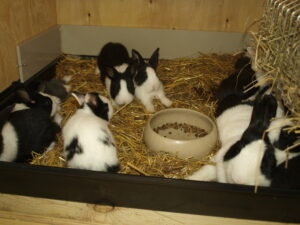
Fig. 1: A lactating doe and pre‑weaning kits represent a high‑risk category of rabbits.
Mistakes when feeding green forage
When feeding green forage, only limited amounts should be offered at one time – following the “golden rule” technique. Additionally, it is important to respect that some herbs are toxic in their green state.
Inappropriate watering and feeding technology
So‑called dual bowls, where one part is used for solid feed and the other for water, are hygienically unsuitable because cross‑contamination always occurs. This leads to rapid deterioration of both water and feed, posing health risks.
Inappropriate nutrient composition of diets
Especially in growing young rabbits before weaning, it is advisable to feed diets with a lower energy density. Particular attention must be paid to higher fiber requirements, which can be further increased by offering more hay or straw. Oat flakes, traditionally used for young rabbits, generally do not show a significant positive effect. Specialized diets and optimal feeding techniques should be preferred.
Frequently asked questions
-
What should form the basis of proper rabbit feeding?
The foundation of proper rabbit feeding is high‑quality hay, which supports healthy digestion and natural tooth wear. Rabbits should have unlimited access to hay. The diet can be supplemented with balanced complete feed, and fresh drinking water must always be available.
-
What are the most common mistakes in feeding rabbits?
Common mistakes include feeding bread, sweets, or kitchen leftovers. Inappropriate feed can cause digestive problems, obesity, or serious gastrointestinal diseases.
-
How often and in what quantity should rabbits be fed?
Rabbits should have hay available at all times. Complete pelleted feed should be provided in recommended amounts according to age, weight, and purpose (breeding, fattening, hobby). Overfeeding may lead to overweight and health problems.
- <
-
Can a sudden change in feed endanger a rabbit’s health?
Yes. A sudden change in the diet can cause diarrhea, bloating, or loss of appetite. Any dietary change should be made gradually, ideally over 7–10 days, so that the rabbit’s digestive system can adapt.
-
How can I tell if a rabbit’s diet is not properly balanced?
Warning signs include diarrhea, bloating, loss of appetite, weight loss, or conversely obesity. If these symptoms appear, it is advisable to adjust the feeding regimen and consult a nutrition specialist or veterinarian.
Related posts
23. February 2026
In small-scale livestock farming, smaller quantities of feed mixtures are often used. Therefore, it is not uncommon for a farmer to have some pellets or loose feed mixture left even after the (expiration) minimum shelf life date. Is it still possible to feed such feed to the animals?
10. April 2024
Keeping dwarf rabbits as pets is becoming increasingly popular. It does not require a lot of space and is ideal for people who live in smaller homes or apartments. Dwarf rabbits are also very friendly, so it’s no wonder that people are choosing them for this purpose more and more often. As with all animals,…
30. August 2022
In this article we will discuss several rabbit diseases – ear scab, tyzzer’s disease and heat stress.
24. August 2022
In this article we look at two diseases – e.Coli and enterocolitis.
2. August 2022
In this article we look at two common rabbit diseases, myxomatosis and infectious rhinitis.
Related products
RABBIT DWARF
Complete pelleted feed for dwarf rabbits with high digestibility. It contains a high proportion of fibre (high alfalfa and grass cake content) and a reduced sugar and starch content. Contains flaxseed, which has a positive effect on coat quality. Suitable for daily feeding. We recommend providing rabbits with safe fresh water and hay.
RABBIT CHAMPION
Feed for show rabbits, does not include Coccidiostat. A unique mix significantly supports the quality and growth of fur. Serve when moulting and at least two months before the start of the show season.
RABBIT GOLD FORTE
A premium feed mix in an ideal make up for gestating and breast feeding females. For the intensive fattening of rabbits for a period of up to 5 days before slaughter. It supports fast growth, meat content and an excellent state of health. It contains a coccidiostat which lowers the risk of mortality.
RABBIT KLASIK FORTE
Intended for the fattening of rabbits up to a point at least 5 days before slaughter. Suitable for attaining a high meat content and an excellent state of health. Thanks to its Coccidiostat content it lowers the animals mortality.
RABBIT KLASIK
For the final phase of rabbit fattening, a minimum of 5 days before slaughter. It supports high meat content and excellent taste qualities in rabbit meat. Without a coccidiostat.
RABBIT START
For young rabbits from the start of accepting feed to 4-6 weeks after weaning. The feed helps to significantly lower the death rate in the period around weaning. It contains a raised percentage of fibre and less starch. It does not contain a coccidiostat.