
Rabbits
Poultry
Laying hens
Quails
Guinea pigs
Pigs
Ostriches
Sheep and goats
Pigeons
Pheasants
Forest animals
Why is it important to follow the recommended dosage of feed mixtures
In small-scale farming, it is common to encounter situations where breeders offer animals a smaller amount of complete feed mixture than recommended by the manufacturer, and replace the rest of the feed ration with grains such as wheat, barley, or corn. Grains certainly have their value in feeding, but on their own, they are not nutritionally complete. Moreover, if the recommended amount of mixture or other added supplements is not followed, neither the mixture nor the supplements will fulfill their purpose—whether it is providing enough nutrients that the animal needs, or the added value from other supplementary substances or medications, such as coccidiostats. In this article, we will look at how this can actually affect the animal. Diluting the mixture with grains disrupts the balance of the feed ration A complete feed mixture is balanced in terms of energy, protein, proper representation of minerals, vitamin concentration, and fiber content. When a breeder “dilutes” the mixture with grains, the balance of the feed ration is disrupted. The animal may then suffer from hidden deficiencies, which later manifest as health problems or decreased productivity. Grains are especially rich in carbohydrates, specifically starch. By offering additional grains or other feed ingredients alongside the feed mixture, you may achieve that the animal has enough energy, but will lack other nutrients that are not present in grains. What is missing in grains? Essential amino acids (lysine, methionine)—amino acids are the basic components of proteins Vitamins A, D, K, part of the B group, vitamin E is limited Calcium and sodium, mineral trace elements (selenium, copper, zinc, …) What effects can this have on laying hens? Soft, thin, or deformed eggshells Reduced laying performance Decreased immunity Cannibalism If the mixture is underdosed, the animal does not receive the full dose of active substances Complete feed mixtures also contain other substances that affect animal health and well-being. In poultry farming, coccidiostats are very often added to feed mixtures (Broiler Mini Forte, Broiler Midi Forte, Turkey Mini Forte, Turkey Midi Forte). Furthermore, feed mixtures contain mineral-vitamin premixes, amino acids, or other functional supplements, such as substances acting against certain types of parasites (e.g., Layer Gold with Acariflash against red mites). However, these substances are only effective if the animal receives the recommended amount of feed mixture. Otherwise, the active substances are “diluted,” resulting in underdosing. What does underdosing of substances intended to improve animal health cause? In the case of coccidiostats, coccidia are not sufficiently suppressed, resistant strains are selected, and undesirable resistance develops With Acariflash (in Layer Gold), red mites are not sufficiently suppressed, and the breeder may mistakenly evaluate the product as ineffective What else does underdosing of the feed mixture cause? Underdosing the feed mixture leads to both health and economic losses. In the end, you pay more than if you had followed the recommended daily dosage from the beginning. Underdosing causes: Weakened immunity Reduced growth Decreased egg production in layers Higher susceptibility to coccidiosis Higher risk of mortality Higher costs for subsequent treatment What is the appropriate solution if you want to use other feeds as well? If you plan for the base of the feed ration to consist of individual feed ingredients, it is better to choose a concentrate (Poultry UNI 30, Ostrich UNI) and, if necessary, add coccidiostats or other supplementary substances required for your farm separately. In conclusion, I would like to once again emphasize the importance of following the recommended dosage, as it is one of the most important factors that can affect the health and production results of animals. The complete feed mixture is formulated to meet the animal’s daily nutrient requirements. If the animal does not receive the recommended amount, it simply will not get what it needs.
In small-scale farming, it is common to encounter situations where breeders offer animals a smaller amount of complete feed mixture than recommended by the manufacturer, and replace the rest of the feed ration with grains such as wheat, barley, or corn. Grains certainly have their value in feeding, but on their own, they are not nutritionally complete. Moreover, if the recommended amount of mixture or other added supplements is not followed, neither the mixture nor the supplements will fulfill their purpose—whether it is providing enough nutrients that the animal needs, or the added value from other supplementary substances or medications, such as coccidiostats. In this article, we will look at how this can actually affect the animal.
Diluting the mixture with grains disrupts the balance of the feed ration
A complete feed mixture is balanced in terms of energy, protein, proper representation of minerals, vitamin concentration, and fiber content. When a breeder “dilutes” the mixture with grains, the balance of the feed ration is disrupted. The animal may then suffer from hidden deficiencies, which later manifest as health problems or decreased productivity.
Grains are especially rich in carbohydrates, specifically starch. By offering additional grains or other feed ingredients alongside the feed mixture, you may achieve that the animal has enough energy, but will lack other nutrients that are not present in grains.
- Essential amino acids (lysine, methionine)—amino acids are the basic components of proteins
- Vitamins A, D, K, part of the B group, vitamin E is limited
- Calcium and sodium, mineral trace elements (selenium, copper, zinc, …)
- Soft, thin, or deformed eggshells
- Reduced laying performance
- Decreased immunity
- Cannibalism
If the mixture is underdosed, the animal does not receive the full dose of active substances
Complete feed mixtures also contain other substances that affect animal health and well-being. In poultry farming, coccidiostats are very often added to feed mixtures (Broiler Mini Forte, Broiler Midi Forte, Turkey Mini Forte, Turkey Midi Forte). Furthermore, feed mixtures contain mineral-vitamin premixes, amino acids, or other functional supplements, such as substances acting against certain types of parasites (e.g., Layer Gold with Acariflash against red mites). However, these substances are only effective if the animal receives the recommended amount of feed mixture. Otherwise, the active substances are “diluted,” resulting in underdosing.
What does underdosing of substances intended to improve animal health cause?
- In the case of coccidiostats, coccidia are not sufficiently suppressed, resistant strains are selected, and undesirable resistance develops
- With Acariflash (in Layer Gold), red mites are not sufficiently suppressed, and the breeder may mistakenly evaluate the product as ineffective
What else does underdosing of the feed mixture cause?
Underdosing the feed mixture leads to both health and economic losses. In the end, you pay more than if you had followed the recommended daily dosage from the beginning.
- Weakened immunity
- Reduced growth
- Decreased egg production in layers
- Higher susceptibility to coccidiosis
- Higher risk of mortality
- Higher costs for subsequent treatment
What is the appropriate solution if you want to use other feeds as well?
If you plan for the base of the feed ration to consist of individual feed ingredients, it is better to choose a concentrate (Poultry UNI 30, Ostrich UNI) and, if necessary, add coccidiostats or other supplementary substances required for your farm separately.
In conclusion, I would like to once again emphasize the importance of following the recommended dosage, as it is one of the most important factors that can affect the health and production results of animals. The complete feed mixture is formulated to meet the animal’s daily nutrient requirements. If the animal does not receive the recommended amount, it simply will not get what it needs.
Related products
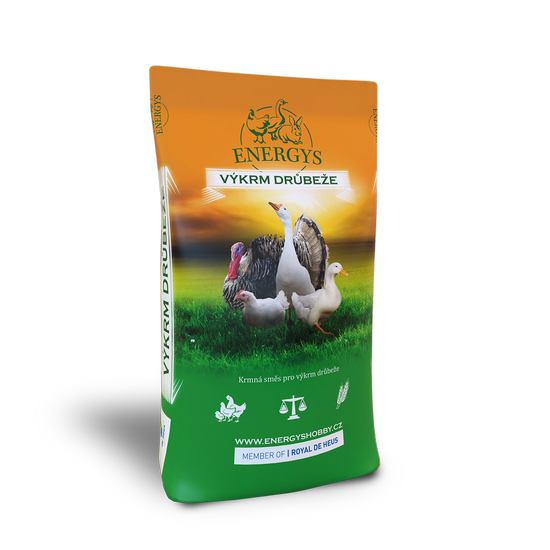
POULTRY UNI 30
A mashed concentrate for fattening of all categories of poultry, which includes the highest quality soja. It is mixed with cereals in a ratio of 20-40% (by type or phase of fattening). It contributes to fast growth and a high meat content. It does not contain coccidiostats.
BROILER MAXI
Feed for the final phase of fattening broilers. Supports a high meat content and a delicate meat taste. Start using it 5 or more days before slaughter. Does not contain coccidiostatics.
BROILER MIDI FORTE
A granulated feed mix for the intensive fattening of broilers from 15 days of age to a minimum of 5 days before ending feeding up. The Coccidiostat included lowers mortality during fattening. For the next phase of fattening Broiler MAXI is a suitable mix.
BROILER MINI FORTE
A ground feed mix with Coccidosistats, for the intensive feeding of broiler chickens up to 14 days of age and a support to fast growth a an excellent state of health in your broliers-
DUCK MINI
A high quality ground mix for fattening ducks and geese up to their 2nd week. It is suitable for fast growth and high meat content.
TURKEY MAXI
Feed for the final stage of turkey fattening. Use from the 13th week of age. It does not contain a coccidiostat.
TURKEY MIDI FORTE
A high quality granulated feed with coccidiostats for feeding turkeys from 5 to 12 weeks of age. It is the basis for fast growth, high meat content and an excellent state of health of your turkeys. The coccidiostat content lowers mortality during feeding. It continues on from feeding with Turkey Mini Forte. The live weight for turkeys at the end of this period should be around 5.9 kg for hen turkeys and 8.9 kg for cocks.
TURKEY MINI FORTE
A ground mix with Coccidiostats for fattening turkeys up to an age of 4 weeks. It is the basis for high meat content. Afterwards use the Turkey Midi Forte mix.
DUCK MAXI
A granulated mix for feeding ducks and geese from 3 weeks of age up to slaughter. The nutrients it contains support fast growth , a high meat content and a delicate meat taste.