
Rabbits
Poultry
Laying hens
Quails
Guinea pigs
Pigs
Ostriches
Sheep and goats
Pigeons
Pheasants
Forest animals
Specialized sheep breeds
In this article, we will take a look at Romanov sheep, which were originally bred primarily for the production of high-quality fur material. We will also cover the dairy breed Lacaune and Shetland sheep.
Romanov Sheep
Romanov sheep originating from the Yaroslavl region have been bred in our country since around the 1960s. Currently, about fifty flocks with approximately 1,100 ewes are involved in performance recording. The breed standard adopted by the Romanov Sheep Breeders’ Club corresponds to the standard according to which the breed was developed in its country of origin. Not only this fact, but also the presence of some original ram lines still maintained in domestic flocks, has attracted interest in local breeding stock from Russian breeders as well.
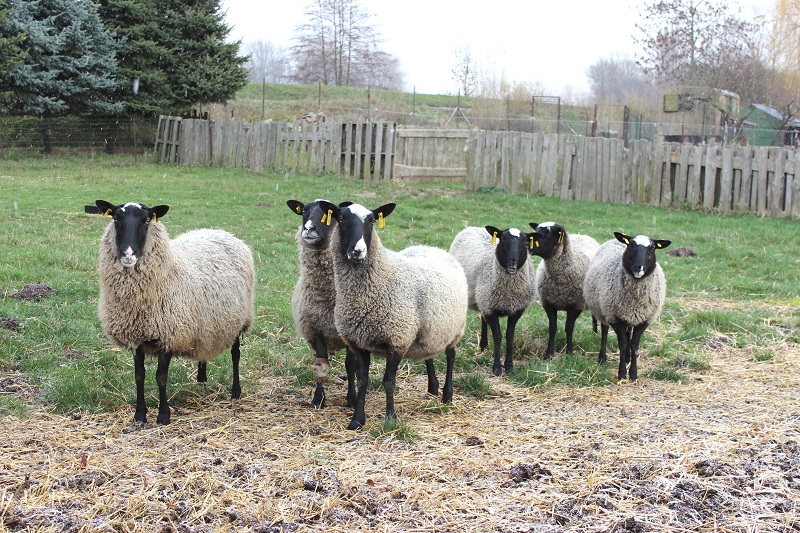
Romanov sheep belong to highly prolific breeds; triplets and quadruplets in a litter are common. The average prolificacy per lambing ewe ranges from 250 to 350%. Other advantages of this breed include early maturity, strong constitution, high milk yield, and seasonal estrus which, together with a shorter gestation period (on average 145 days), allows for lambing twice a year. Ram lambs and ewe lambs reach sexual maturity at four to six months of age; ewe lambs can be bred for the first time once they reach a minimum weight of 35 kg, which corresponds to about seven months of age.
Originally, however, Romanov sheep were bred mainly for the production of high-quality fur material. The fleece is typically bluish to black due to black guard hairs that complement the undercoat in a ratio of 1:4–10, making Romanov pelts truly exceptional. The tanned skin is light, warm, and durable, and compared to the skins of some other breeds, it weighs roughly one third as much.
Lacaune
Among dairy sheep breeds, the Lacaune breed has been gaining ground in our flocks. It is kept by twenty-one breeders with a total of 1,521 ewes. It is a polled, medium-framed breed with combined meat and milk performance, originating from the southern part of the Massif Central in the regions of Aveyron, Tarn, Lozère, and Hérault. The live weight of adult rams ranges from 80 to 100 kg, while ewes are 20 to 40 kg lighter.
The breed is characterized by a very long breeding season (in the meat type, three lambings in two years are practiced), early maturity, high milk production, and excellent maternal abilities. The average lactation period ranges from six to eight months, with an average milk yield of 250 to 300 liters. Some ewes, however, achieve milk production of up to 700 liters per lactation. The well-developed udder meets the requirements for machine milking.
Due to its high milk production, the Lacaune breed is suitable for semi-intensive to intensive production systems. Extensive systems are unsuitable mainly from the standpoint of nutrition and health control. The breed is raised in many countries worldwide both in pure breeding and for improving local sheep breeds.
Shetland Sheep
Since 2008, Shetland sheep have also been bred in our country. In their country of origin, they occur in eleven basic colors forming thirty recognized color combinations. They are a short-tailed northern breed of smaller body frame with combined utility, originating from the Shetland Islands. A characteristic feature is their fine to semi-fine, variably colored wool, which creates a wide range of shades. The sheep are known for good milk production, hardiness, low management requirements, longevity, easy lambing, and good maternal qualities
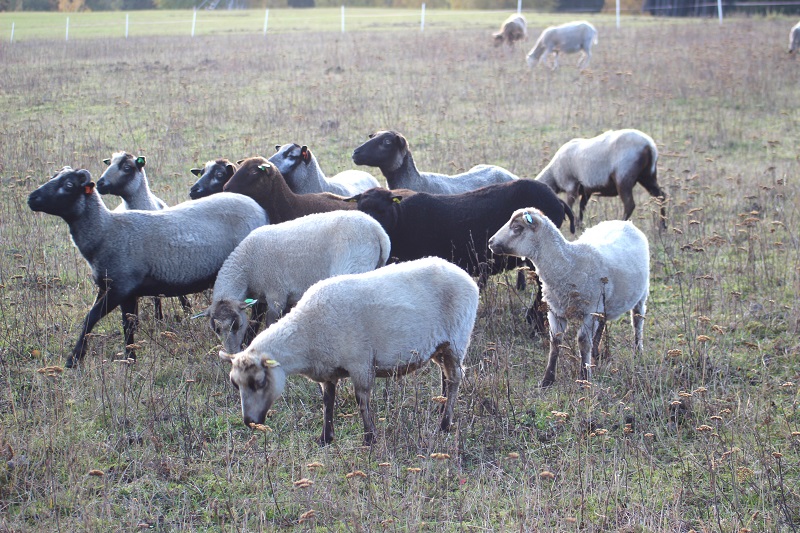
From one sheep, 0.9 to 1.4 kg of quality greasy wool is obtained by shearing. It is reported that Shetland wool fibers have an average thickness of 23 microns and a length of about 9 cm, with variable crimp that gives knitted fabrics elasticity. The finest fibers have three to five waves per centimeter of length. Wool quality is influenced not only by the timing of shearing but also by handling during the process. To ensure the wool remains clean and dry, sheep are shorn under cover on a clean surface. The washed and combed wool is spun into single- or two-ply yarn, ready for knitting or weaving. Another option is felting. Using the so-called wet method, items such as hats, kidney belts, or seat pads can be made. In contrast, dry felting is used to produce jewelry such as earrings, clips, pendants, rings, or even toy animals. Coarser wool can be used as pillow filling.
Related posts
3. March 2026
Sprouted cereals are a simple way to enrich the feed ration, especially for poultry. Thanks to the germination process, nutrient digestibility increases and their availability improves. However, they are not a substitute for a complete feed mixture, but rather a suitable supplement when used properly and hygienically.
23. February 2026
In small-scale livestock farming, smaller quantities of feed mixtures are often used. Therefore, it is not uncommon for a farmer to have some pellets or loose feed mixture left even after the (expiration) minimum shelf life date. Is it still possible to feed such feed to the animals?
30. April 2020
Racka sheep resemble a woolly antelope in appearance. The horns are also exceptional in the Jacob breed. The smallest breed kept in our country is the Ouessant sheep.
2. April 2020
In this article, we will take a look at Romanov sheep, which were originally bred primarily for the production of high-quality fur material. We will also cover the dairy breed Lacaune and Shetland sheep.
19. September 2019
Due to the growing human population and the shortage of sources of protein, goats, as undemanding but highly productive animals, will become increasingly important to man, who they have served for thousands of years. What to feed goats and how to take care of them?
Related products
SHEEP UNI
A supplementary feed mix for weaning and fattening sheep and goats. It can also be used for lamas. The feed is treacled and also suitable for gestating and milking animals. The substances contained in it support their excellent state of health a required breeding results.
LAMB
A starter for lambs and kids suitable from the first week to the 3rd week of age. First it is added to milk, later it is combined with hay. It supports the growth of a paunch, the growth of bones and muscle.