
Rabbits
Poultry
Laying hens
Quails
Guinea pigs
Pigs
Ostriches
Sheep and goats
Pigeons
Pheasants
Forest animals
Sneezing Does Not Always Mean Infectious Rhinitis
A number of factors contribute to the development of rhinitis (snuffles) in rabbits, many of which can be influenced to prevent the disease from manifesting.
Causes of Rhinitis in Rabbits
The primary infectious agent is mainly the bacterium Pasteurella multocida and its respective serotypes. These are part of the natural microflora found on the mucous membranes of the upper respiratory tract. In healthy rabbits kept under good living conditions, clinical signs usually do not develop. The disease typically appears in connection with the overgrowth of this bacterium as a result of stress.
The causative agent is transmitted by direct contact, but also indirectly via equipment, the breeder’s clothing, etc. It does not tend to spread over long distances via airborne droplets.
Factors Contributing to the Visible Onset of Rhinitis
Concentration of Stable Gases in the Air
Rabbits are particularly sensitive to higher concentrations of ammonia, which mainly originates from the decomposition of feces and urine. Long-term exposure leads to irritation of the mucous membranes and a reduction of the natural protective barrier. In covered outdoor housing systems, this problem is rarely encountered.
Infrequent Cleaning of Housing Areas
Especially during the summer and while raising young rabbits, more frequent cleaning of cages is necessary. Accumulated feces also act as an undesirable source of heat.
Dustiness
Rabbits do not tolerate dusty environments. Attention must be paid to the physical quality of the feed provided (hard pellets, properly cleaned grains after harvest), as well as the quality of straw and hay. For pet rabbits, special almost dust-free bedding materials are available. Increased dust levels are often associated with lower air humidity (approximately below 40% relative humidity).
Temperature and Humidity Discomfort
The optimal thermoneutral zone for a healthy adult rabbit is approximately 15–17°C (59–63°F). Rabbits can generally tolerate temperatures between 5–22°C (41–72°F) without problems. Higher temperatures are tolerated poorly, which is reflected in a rapid decrease in their immune resistance.
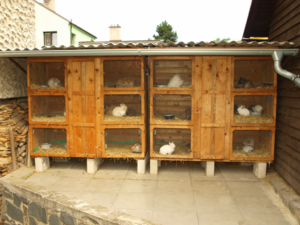
Fig. 1 Covered outdoor rabbit housing reduces the incidence of rhinitis
Overcrowding
Overcrowding of cages, especially among young rabbits, leads to higher disease incidence, increased production of stable gases, and aggression.
Age
In general, older animals and young rabbits are more susceptible to diseases.
Sudden Dietary Changes
Rabbits usually react negatively to sudden changes in diet, which may result in serious digestive problems. The standard is a pelleted diet with optimal nutritional composition according to age, physiological condition, and breeding purpose.
Poorly Balanced Diet and/or Feeding Technique
Significant deviations from recommended nutrient levels (especially excess protein and starch and insufficient fiber) are quickly reflected in the health of the rabbit’s digestive system and overall performance. Completely ad libitum feeding of concentrated feed can be considered inappropriate. Dividing the daily ration into smaller portions so that the rabbit consumes each portion within approximately 30 minutes appears to be a much better feeding technique.
The factors mentioned above are only the most common influences. Rabbit rhinitis is a complex problem that requires solutions primarily in the area of preventive measures. However, by adhering to basic zootechnical, hygienic, and epizootological principles, the occurrence of rhinitis in rabbit breeding can be significantly reduced.
As part of basic “breeder-level” diagnostics, it is recommended to examine the inner surfaces of the front legs. Note that some rabbits may suffer from allergies, so do not confuse allergies with infectious rhinitis. In cases of infectious rhinitis, the inner surfaces of the front legs become soiled due to chronic mucopurulent nasal discharge.
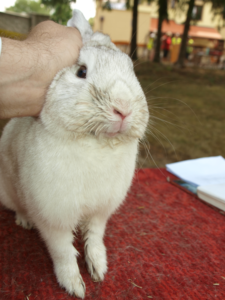
Fig. 2 In infectious rhinitis, there is pronounced long-term nasal discharge and soiling of the front legs
Related posts
23. February 2026
In small-scale livestock farming, smaller quantities of feed mixtures are often used. Therefore, it is not uncommon for a farmer to have some pellets or loose feed mixture left even after the (expiration) minimum shelf life date. Is it still possible to feed such feed to the animals?
10. April 2024
Keeping dwarf rabbits as pets is becoming increasingly popular. It does not require a lot of space and is ideal for people who live in smaller homes or apartments. Dwarf rabbits are also very friendly, so it’s no wonder that people are choosing them for this purpose more and more often. As with all animals,…
30. August 2022
In this article we will discuss several rabbit diseases – ear scab, tyzzer’s disease and heat stress.
24. August 2022
In this article we look at two diseases – e.Coli and enterocolitis.
2. August 2022
In this article we look at two common rabbit diseases, myxomatosis and infectious rhinitis.
Related products
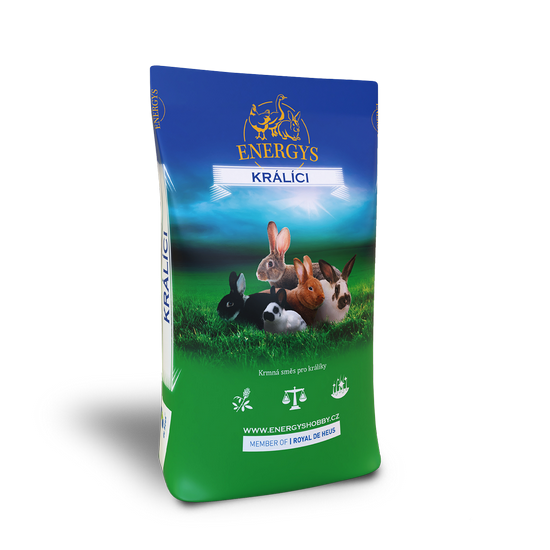
RABBIT DWARF
Complete pelleted feed for dwarf rabbits with high digestibility. It contains a high proportion of fibre (high alfalfa and grass cake content) and a reduced sugar and starch content. Contains flaxseed, which has a positive effect on coat quality. Suitable for daily feeding. We recommend providing rabbits with safe fresh water and hay.
RABBIT CHAMPION
Feed for show rabbits, does not include Coccidiostat. A unique mix significantly supports the quality and growth of fur. Serve when moulting and at least two months before the start of the show season.
RABBIT GOLD FORTE
A premium feed mix in an ideal make up for gestating and breast feeding females. For the intensive fattening of rabbits for a period of up to 5 days before slaughter. It supports fast growth, meat content and an excellent state of health. It contains a coccidiostat which lowers the risk of mortality.
RABBIT KLASIK FORTE
Intended for the fattening of rabbits up to a point at least 5 days before slaughter. Suitable for attaining a high meat content and an excellent state of health. Thanks to its Coccidiostat content it lowers the animals mortality.
RABBIT KLASIK
For the final phase of rabbit fattening, a minimum of 5 days before slaughter. It supports high meat content and excellent taste qualities in rabbit meat. Without a coccidiostat.
RABBIT START
For young rabbits from the start of accepting feed to 4-6 weeks after weaning. The feed helps to significantly lower the death rate in the period around weaning. It contains a raised percentage of fibre and less starch. It does not contain a coccidiostat.