
Rabbits
Poultry
Laying hens
Quails
Guinea pigs
Pigs
Ostriches
Sheep and goats
Pigeons
Pheasants
Forest animals
How to store eggs?
A hen in our flock should lay her egg in a nesting box lined with clean straw; the eggs should be clean and have intact shells.
Nesting boxes
Under our conditions, most eggs are laid between 8 a.m. and 12 noon, so it is advisable to check the nests and collect the eggs at least twice a day.
Nesting boxes that allow the egg to roll out of the hen’s reach are advantageous – this prevents contamination and damage to the egg for any reason.
Storing eggs
Place the eggs on a tray or in packaging with the pointed end down – there is an air cell at the blunt end, and this must remain at the top.
Eggs are best stored at a constant, non-fluctuating temperature of around 10°C for a maximum of 3–4 weeks; at a steady temperature of around 4°C, they can be stored even longer – as was common in the past with refrigerated eggs.
In the past, eggs were preserved for the winter period, when fresh eggs were scarce, in water glass (sodium silicate solution) or lime water for several months.
Of course, fresh eggs are the best – ideally consumed within one or two weeks after being laid.
Related posts
3. March 2026
Sprouted cereals are a simple way to enrich the feed ration, especially for poultry. Thanks to the germination process, nutrient digestibility increases and their availability improves. However, they are not a substitute for a complete feed mixture, but rather a suitable supplement when used properly and hygienically.
23. February 2026
In small-scale livestock farming, smaller quantities of feed mixtures are often used. Therefore, it is not uncommon for a farmer to have some pellets or loose feed mixture left even after the (expiration) minimum shelf life date. Is it still possible to feed such feed to the animals?
7. October 2025
The chicken mite is a dangerous parasite that causes stress, anemia, and reduces egg production in laying hens. Chemical products are losing their effectiveness and are subject to legislative restrictions. Herbal extracts are a possible natural alternative that repels mites and promotes poultry health.
8. April 2025
Breeders raising hens for egg production naturally want them to produce as many eggs as possible while keeping costs low. For this purpose, commercial breeders exclusively use specially-bred hybrid layer hens created by crossing different genetic lines of pure breeds. These hybrid breeds carry in their genetic information the desired traits such as a high…
19. June 2024
The domestic chicken, or hen, is one of the most important farm animals and provides benefits in the form of eggs and meat. Today, more and more emphasis is being placed on animal welfare. As a result, farmers are already starting to prepare for mandatory changes to the housing of laying hens. The following article…
Related products
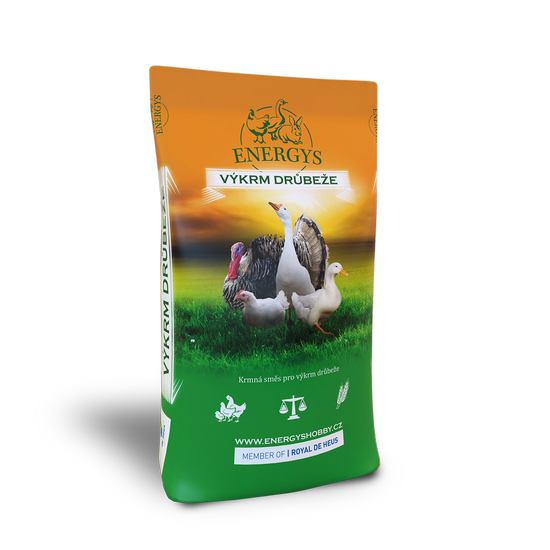
POULTRY UNI 30
A mashed concentrate for fattening of all categories of poultry, which includes the highest quality soja. It is mixed with cereals in a ratio of 20-40% (by type or phase of fattening). It contributes to fast growth and a high meat content. It does not contain coccidiostats.
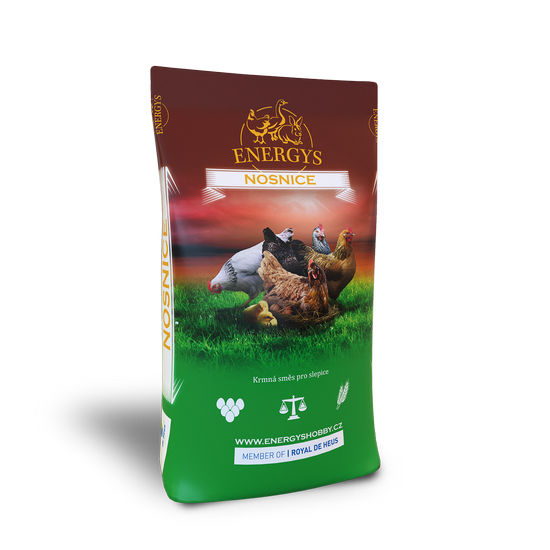
LAYER REPRO
Granulated feed for laying hen breeds. Supports higher hatching rates and the successful development of the embryo. Higher content of chosen substances). The laying hen must have access to an adequate amount of potable water.
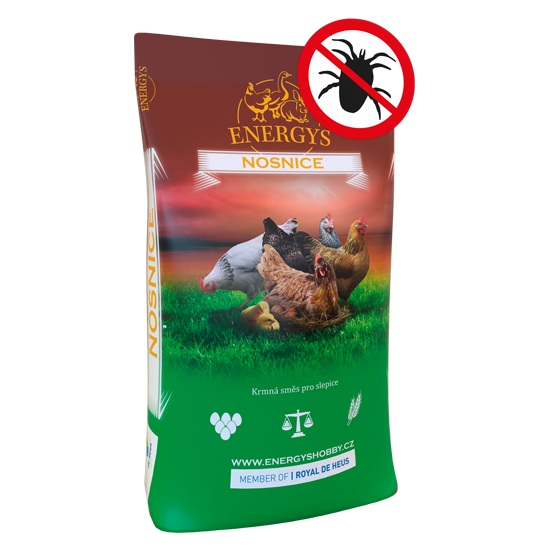
LAYER GOLD
Granulated feed for laying hens. Supports high egg production with strong shells and beautiful yolk color. Enriched with a complex of natural substances that combat chicken mites, promote detoxification, liver health, and prevent intestinal parasites. Follows on from the Chicken MIDI feed mixture. Feed year-round for long-term protection.
LAYER KLASIK
A powered feeding mix intended for laying hens. With its rough shredded structure it contributes to maximum usability.
CHICKEN MIDI
From the 5th week to the end of the 20 week old chickens. It follows on from feeding with the Chicken MINI feed. Through its make up it helps in the correct development of the organism and with future high usability. It doesn’t contain coccidiostats. It is produced in two forms, granulated and powder.
CHICKEN MINI
A crumbled compound feed without anti-coccidiosides. Suitable for reared chickens of the laying hen type till the end of their 4 weeks of age. It contains a balanced ratio of nutrients supporting the correct development of chickens. For weaning chickens the following mix is CHICKEN MIDI.