
Rabbits
Poultry
Laying hens
Quails
Guinea pigs
Pigs
Ostriches
Sheep and goats
Pigeons
Pheasants
Forest animals
What breeds of hens are suitable for beginners?
Chickens are the most numerous bird species in the world, so it’s no wonder you’re stumped on the ideal breed for your backyard. Because everyone needs something a little different – and sometimes, unfortunately, that’s just what a beginner is unable to give his hens if he makes the wrong choice. So how do you make the right and responsible choice?
Ask yourself
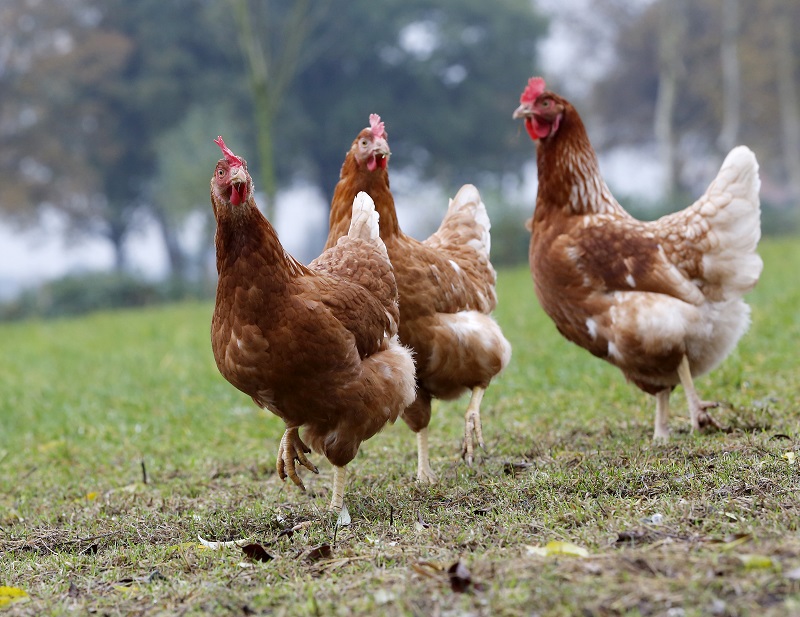 To do what is good for both you and the chickens, start with yourself. By asking yourself a few simple but important questions. How much time are you able and willing to give? How much space do you have and what facilities do you have for breeding? And why do you want to keep chickens? For beginners, we recommend breeds that require less time and care.
For the satisfaction of you and your hens
Ideal for you to start with is a hen that is calm and within limits also obedient. You also want her to lay as many eggs as possible in a year, but not consume a lot of feed. The hen you choose should also not be susceptible to various diseases and possibly be easy to care for. Isn’t there such a thing as an ideal hen? Wrong. There is, and not just one.
Leghorn
It is the most famous bred white hen in the world. If you’re looking for a hard worker, this is the hen for you – she lays about 180 more white-shelled eggs a year. Originally from italy, the leghorn was bred specifically for high egg laying. At 2 kg, it is one of the lightest breeds. Its appearance is characterised by its distinctive yellow claws. Beware of flightiness, which should disappear with time. If it does not, clip the wings of your hens.
Czech golden sprinkle
Kropenka is one of the light breeds that are well suited to our climate. They are ideal for free range, where they can find their own food. This reduces their feed consumption. They are quite hardy, so they carry on in the winter, and naturally resist disease. They have a strong maternal instinct and lay around 180 eggs a year.
Plymutka
A popular breed with high performance is the plummouse. This hen is also very teachable and can find some of her own food in a large run. It lays 180-210 eggs with a light brown shell per year, also during the winter months. Children will also love it because of its calm nature.
The platypus was bred in america. In addition to the regular laying of eggs, their popularity is also due to the tenderness and juiciness of their meat. With a weight of around 2.3 – 2.9 kg, they are a medium-heavy breed, with smaller heads, long yellow legs and a wide body.
Hybrid hens
Hybrid hens have been bred from standard breeds to produce as many eggs as possible with the least amount of feed. Domestic breeding is not recommended for these breeds because of the lower laying quality of their offspring. Compared to the standard breeds, they have a higher egg laying rate (about 300 eggs per year), but it is recommended to remove them from domestic breeding at about 1.5 years of age. The classic breeds lay less (around 200 eggs per year), but you can keep them in your backyard for 3 years and breed them while maintaining egg production.
The choice of laying hybrids is very varied, both in hen colour, with red, blue or brindle being the most popular, and shell colour. Here you can also get hybrids with green, blue or dark brown eggs.
Now you just need to make the right choice, give the hen the appropriate care and then just enjoy your homemade eggs in different ways.
Related posts
4. June 2026
Feather pecking and subsequent cannibalism are among the most serious behavioral disorders in laying hen flocks and can cause significant economic losses (e.g., reduced egg production, poorer feed conversion, and higher mortality).
27. May 2026
In small-scale farming practice, the term grit refers to insoluble mineral material that poultry ingest to mechanically process feed in their digestive tract. It is therefore a physically acting component that supports digestion. Typically, it consists of small stones (often siliceous gravel). On the other hand, there is limestone (calcium carbonate), which also fulfills a…
3. March 2026
Sprouted cereals are a simple way to enrich the feed ration, especially for poultry. Thanks to the germination process, nutrient digestibility increases and their availability improves. However, they are not a substitute for a complete feed mixture, but rather a suitable supplement when used properly and hygienically.
23. February 2026
In small-scale livestock farming, smaller quantities of feed mixtures are often used. Therefore, it is not uncommon for a farmer to have some pellets or loose feed mixture left even after the (expiration) minimum shelf life date. Is it still possible to feed such feed to the animals?
7. October 2025
The chicken mite is a dangerous parasite that causes stress, anemia, and reduces egg production in laying hens. Chemical products are losing their effectiveness and are subject to legislative restrictions. Herbal extracts are a possible natural alternative that repels mites and promotes poultry health.
Related products
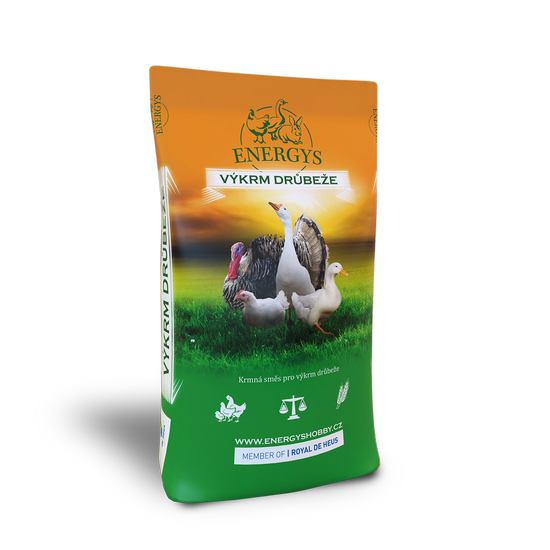
POULTRY UNI 30
A mashed concentrate for fattening of all categories of poultry, which includes the highest quality soja. It is mixed with cereals in a ratio of 20-40% (by type or phase of fattening). It contributes to fast growth and a high meat content. It does not contain coccidiostats.
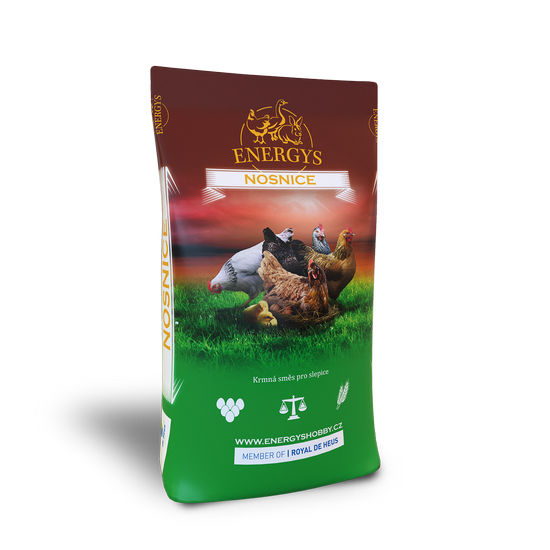
LAYER REPRO
Granulated feed for laying hen breeds. Supports higher hatching rates and the successful development of the embryo. Higher content of chosen substances). The laying hen must have access to an adequate amount of potable water.
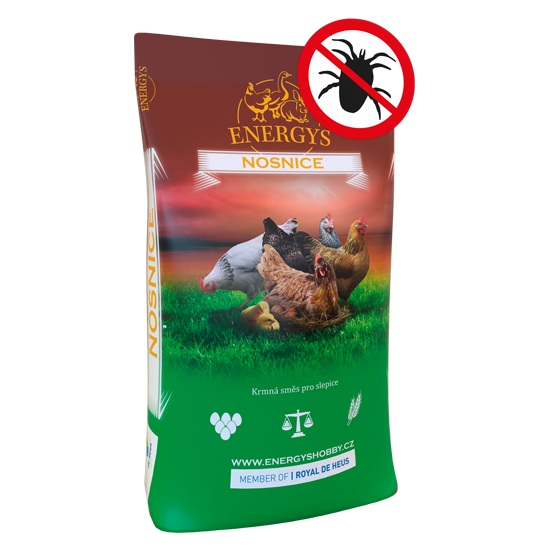
LAYER GOLD
Granulated feed for laying hens. Supports high egg production with strong shells and beautiful yolk color. Enriched with a complex of natural substances that combat chicken mites, promote detoxification, liver health, and prevent intestinal parasites. Follows on from the Chicken MIDI feed mixture. Feed year-round for long-term protection.
LAYER KLASIK
A powered feeding mix intended for laying hens. With its rough shredded structure it contributes to maximum usability.
CHICKEN MIDI
From the 5th week to the end of the 20 week old chickens. It follows on from feeding with the Chicken MINI feed. Through its make up it helps in the correct development of the organism and with future high usability. It doesn’t contain coccidiostats. It is produced in two forms, granulated and powder.
CHICKEN MINI
A crumbled compound feed without anti-coccidiosides. Suitable for reared chickens of the laying hen type till the end of their 4 weeks of age. It contains a balanced ratio of nutrients supporting the correct development of chickens. For weaning chickens the following mix is CHICKEN MIDI.